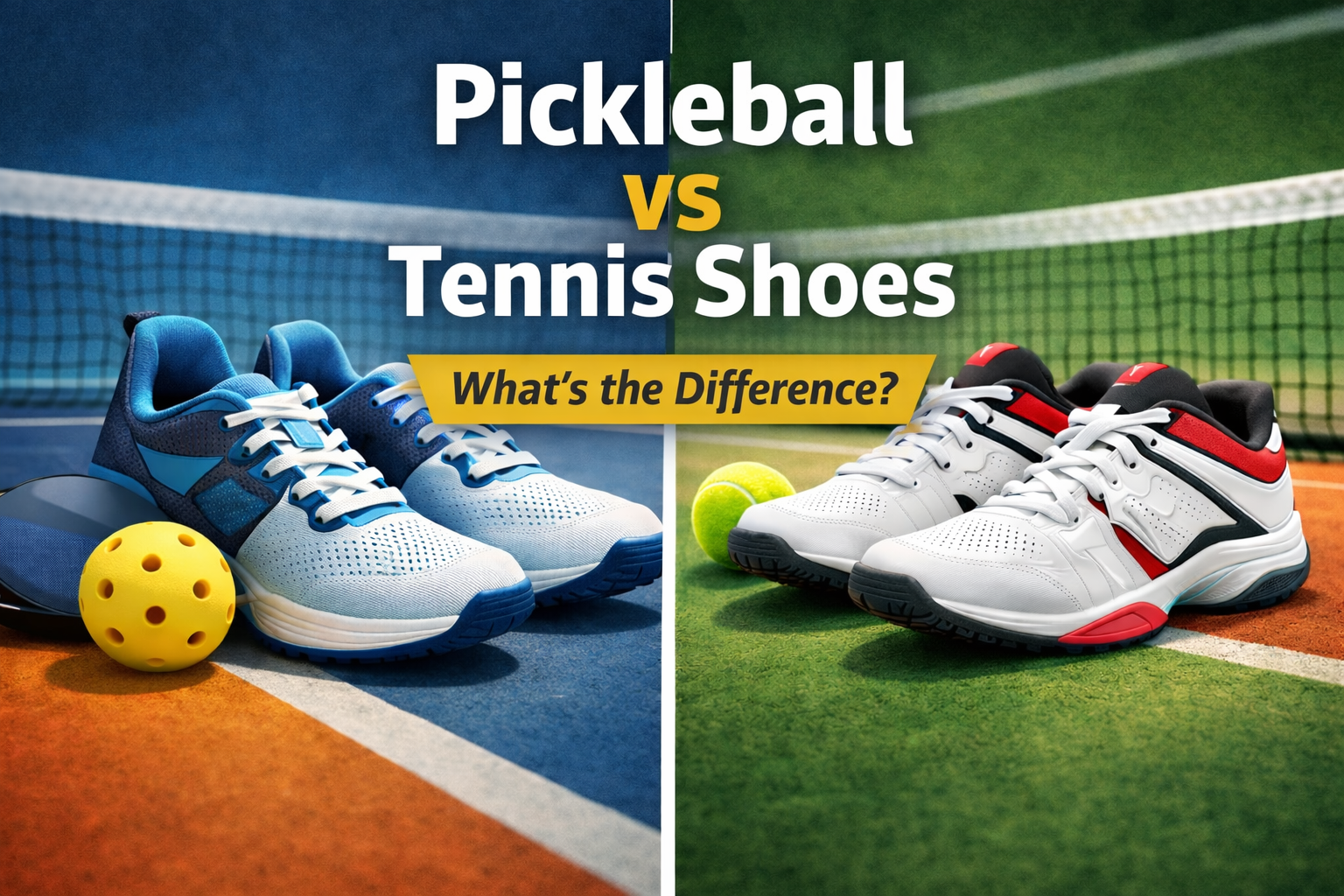
Pickleball shoes vs tennis shoes is a common comparison many players think about when choosing the right footwear for court sports.When I first started learning about court shoes, I often wondered whether pickleball shoes and tennis shoes were basically the same. At a glance, they look very similar. Both are made for courts, both support movement, and both seem suitable for sports that involve quick steps.
But after reading, researching, and understanding how these shoes are designed, I realized there are some important differences. In this article, I want to share what I’ve learned about pickleball shoes vs tennis shoes, and which option makes more sense for different types of players.
Why People Get Confused Between These Two
Pickleball is a relatively new sport compared to tennis. Because of that, many people naturally assume tennis shoes are good enough for pickleball.
From my point of view, this confusion happens because:
- both sports use court surfaces
- movements look similar
- the shoes look almost identical
But small differences in movement and court size change what kind of support is really needed.
How Pickleball Movement Is Different
Pickleball courts are smaller than tennis courts. The game involves:
- quick side-to-side steps
- short forward and backward movements
- lots of stopping and starting
There is less long-distance running and more quick reactions.
Because of this, pickleball players need shoes that feel:
- stable
- comfortable
- flexible for short movements
How Tennis Movement Is Different
Tennis courts are larger, and rallies often involve longer runs. Tennis players usually:
- cover more ground
- move at higher speeds
- use stronger lateral pushes
Tennis shoes are designed to handle:
- intense movement
- powerful direction changes
- higher impact
They often feel more rigid and heavy.
Cushioning Differences
One of the biggest differences I noticed is cushioning.
Pickleball Shoes
Pickleball shoes usually have moderate cushioning. They focus more on comfort and flexibility because the game involves many short movements.
Tennis Shoes
Tennis shoes often have stronger cushioning to absorb impact from fast running and jumping.
From my understanding, beginners in pickleball usually feel more comfortable with lighter cushioning rather than very stiff shoes.
Weight and Flexibility
Weight makes a big difference in how shoes feel on the court.
Pickleball shoes:
- usually feel lighter
- allow easier movement
- feel more relaxed
Tennis shoes:
- often feel heavier
- provide stronger structure
- may feel stiff for beginners
For players who enjoy smooth and easy movement, pickleball shoes often feel more natural.
Side Support and Stability
Both shoes offer side support, but the focus is slightly different.
Pickleball shoes:
- focus on comfort and balance
- support quick short movements
- reduce foot fatigue
Tennis shoes:
- focus on powerful side movement
- support aggressive turns
- protect against high-speed motion
From my point of view, tennis shoes may feel “too much” for casual pickleball players.
Grip and Court Surface
Grip is important in both sports, but the court conditions vary.
Pickleball courts can be:
- indoor gym floors
- outdoor concrete or asphalt
Tennis courts may be:
- clay
- grass
- hard courts
Tennis shoes are designed for different tennis surfaces, which sometimes makes them less suitable for pickleball courts.
Pickleball shoes usually offer grip that works well on most pickleball surfaces.Many pickleball guides also explain how court surface affects shoe grip and durability, which helps players make better choices.
Comfort for Long Playing Sessions
Pickleball is often played socially, and games can last for hours.
From what I’ve seen, comfort matters more than extreme performance.
Pickleball shoes are designed to:
- reduce foot fatigue
- stay comfortable for long periods
- feel breathable
Tennis shoes may feel tiring after long casual sessions because of their heavier build.
Which One Is Better for Beginners?
This is where the main difference becomes clear.
For beginners:
- pickleball shoes feel easier
- tennis shoes feel more demanding
If someone is new to pickleball, tennis shoes may feel stiff, heavy, or uncomfortable.
Pickleball shoes usually provide a smoother learning experience.
Can You Use Tennis Shoes for Pickleball?
Yes, tennis shoes can be used for pickleball, especially if:
- you already own them
- you play occasionally
- you are comfortable with them
But from my experience, they are not always ideal.
They may:
- feel heavier
- reduce comfort
- cause foot fatigue
For regular players, pickleball shoes make more sense.
Which Should You Choose?
Choosing between pickleball shoes vs tennis shoes depends on your playing style.
Choose pickleball shoes if:
- you are a beginner
- you play socially
- you prefer comfort
- you want lighter shoes
Choose tennis shoes if:
- you already play tennis
- you prefer strong structure
- you move aggressively
- you are used to heavier footwear
If you want a deeper guide on fit, comfort, and support, you can also read our detailed guide on men’s pickleball shoes.
Final Thoughts
After understanding both options, I feel that pickleball shoes and tennis shoes are not the same, even if they look similar.
Tennis shoes are built for power and speed. Pickleball shoes are built for comfort and control.
From my point of view, most casual and beginner players will enjoy pickleball more with proper pickleball shoes. They feel lighter, more comfortable, and better suited for the game.
Tennis shoes are not wrong, but pickleball shoes are simply more practical for most people.
FAQs – Pickleball Shoes vs Tennis Shoes
No, they are designed differently based on how each sport is played.
Yes, but pickleball shoes usually offer better comfort for regular play.
Pickleball shoes are usually better for beginners because they feel lighter and easier to move in.
Tennis shoes are often more durable, but may feel heavy for casual pickleball players.
Yes, especially if used on the right court surface.
Only if you play both sports regularly. Otherwise, choose the one that matches your main activity.