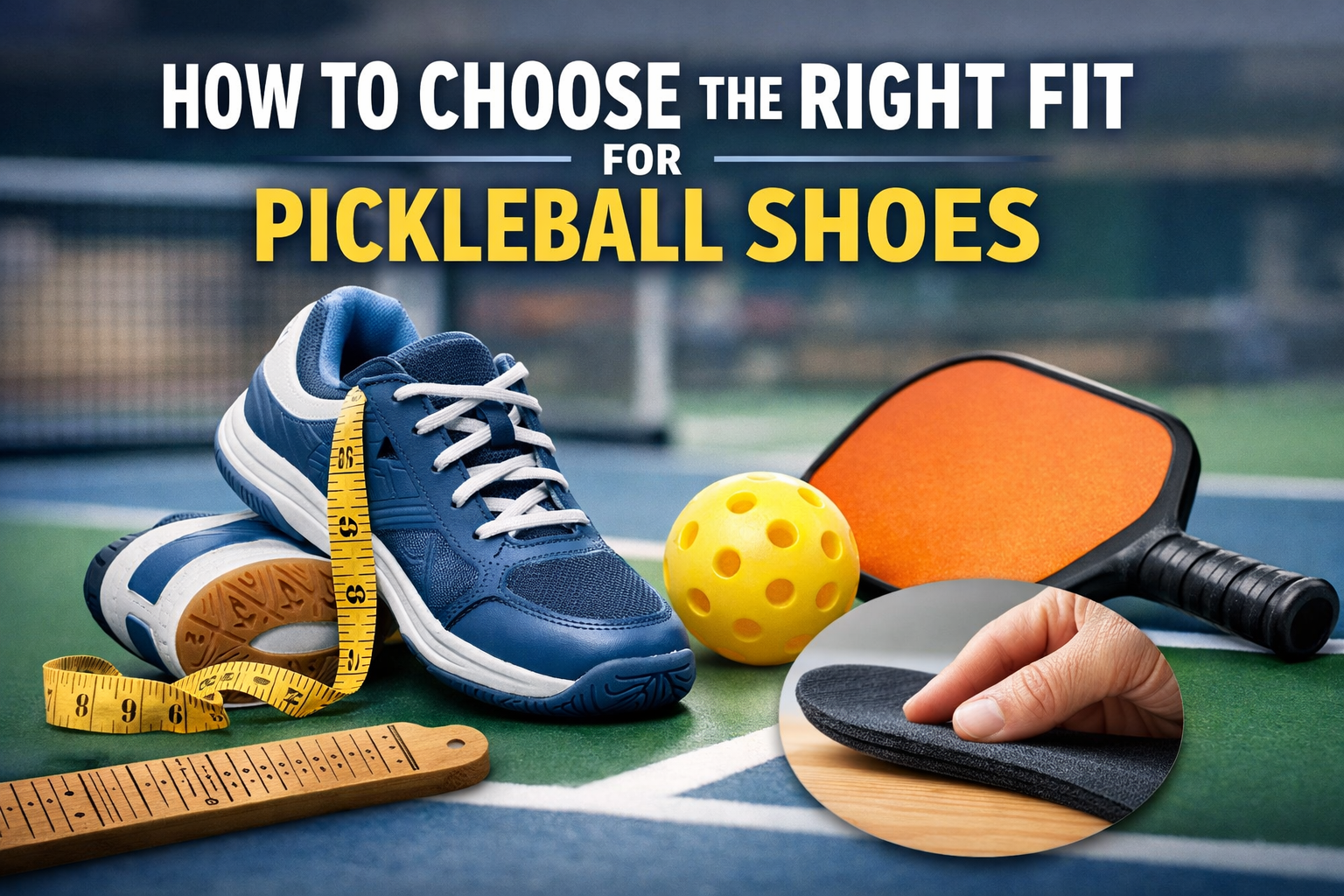
Choosing the right shoes for pickleball is more important than many people think. At first, I assumed any sports shoe would work. But after learning more about the game and how different shoes affect comfort and movement, I realized that fit plays a big role in how enjoyable and safe the game feels.
When it comes to how to choose the right fit for pickleball shoes, it’s not just about size. It’s about how the shoe supports your foot, how it feels during movement, and whether it stays comfortable over long playing sessions.
In this article, I want to share what I’ve learned about finding the right fit, using simple and practical points that anyone can follow.
Why Fit Matters More Than You Think
Pickleball involves a lot of:
- side-to-side movement
- quick stops
- standing for long periods
If shoes don’t fit properly, this can lead to:
- foot pain
- heel discomfort
- blisters
- ankle strain
From my point of view, even the most expensive shoes won’t help if the fit is wrong. Proper fit is the foundation of comfort and performance.
For a more general overview of comfort, support, and shoe types, you can also read my detailed guide on men’s pickleball shoes.
Start With the Right Size (But Don’t Stop There)
Most people focus only on shoe size, but size is just the starting point.
A good pickleball shoe should:
- match your foot length
- not feel tight or loose
- allow natural movement
However, two shoes of the same size can feel completely different. That’s why fit matters more than the number on the label.
Toe Space Is Very Important
One of the first things I check is toe space.
Your toes should:
- not touch the front of the shoe
- have a little room to move
- feel relaxed, not squeezed
Too little space can cause:
- black toenails
- pain
- long-term discomfort
Too much space can cause:
- slipping inside the shoe
- blisters
- lack of control
The goal is a small but comfortable gap.
Many foot health guides also explain how proper shoe fit helps prevent foot pain and long-term discomfort.
Heel Should Feel Secure
The heel area is just as important.
A good fit means:
- heel stays in place
- no slipping while walking
- no rubbing at the back
If the heel moves too much, it can cause:
- blisters
- instability
- foot fatigue
From my experience, heel comfort often decides whether a shoe feels good or bad after an hour.
Width Matters More Than People Realize
Many people ignore shoe width, but it makes a big difference.
If shoes feel:
- tight on the sides → too narrow
- loose and sloppy → too wide
Flat feet, wide feet, and narrow feet all need different shapes.
Shoes should feel:
- snug but not tight
- supportive but not squeezing
Pressure on the sides usually means the shoe is not the right shape for your foot.
Arch Support and Natural Feel
Arch support plays a big role in fit.
Good arch support:
- reduces foot fatigue
- improves balance
- distributes body weight evenly
From what I’ve learned, arch support should feel:
- natural
- not painful
- not forced
You shouldn’t feel like your foot is being pushed into an uncomfortable position.
Cushioning and Comfort
Cushioning affects how shoes feel on hard courts.
Too little cushioning:
- causes foot pain
- increases joint stress
Too much cushioning:
- reduces stability
- makes movement feel slow
The best fit is a balance between:
- softness for comfort
- firmness for control
Comfort should last throughout the game, not just in the first five minutes.
Try Shoes Later in the Day
This is a simple trick that many people don’t know.
Feet tend to:
- swell slightly during the day
- feel bigger in the evening
Trying shoes later helps you choose a size that stays comfortable even after long activity.
From my point of view, this small habit can prevent many fitting mistakes.
Walk and Move Before Deciding
When trying shoes, don’t just stand still.
You should:
- walk around
- move side to side
- bend your knees
- simulate game movement
Shoes may feel fine while standing, but uncomfortable when moving.
Movement reveals real fit issues.
Socks Make a Difference
Socks affect how shoes fit.
Thick socks:
- reduce space
- make shoes feel tighter
Thin socks:
- increase space
- may cause slipping
It’s best to try shoes with the same type of socks you’ll use for playing.
Indoor vs Outdoor Fit
Court type also affects fit.
Indoor Shoes
Usually feel:
- lighter
- more flexible
- softer
Outdoor Shoes
Usually feel:
- firmer
- more structured
- more durable
Outdoor courts are harder, so fit needs to feel more stable.
Don’t Ignore Comfort Signs
Your body usually tells you if something is wrong.
Warning signs:
- pressure points
- numbness
- burning sensation
- immediate pain
Good shoes should feel comfortable from the start. They shouldn’t require “breaking in” to stop hurting.
Are Running Shoes Good for Pickleball Fit?
Running shoes are designed for forward movement, not side movement.
From what I’ve learned:
- they may feel comfortable initially
- but lack side support
- can feel unstable
Pickleball shoes are designed for:
- court movement
- balance
- lateral stability
So fit feels more natural for the game.
How Often Fit Changes
Feet change over time.
Fit may change because of:
- weight changes
- aging
- foot conditions
- long-term wear
That’s why old shoes may stop feeling comfortable even if the size is the same.
Checking fit regularly is a good habit.
My Simple Checklist for Shoe Fit
When choosing pickleball shoes, I mentally check:
- Enough toe space
- Secure heel
- Comfortable width
- Natural arch support
- Balanced cushioning
- No pressure points
If all these feel right, the shoe usually works well.
Final Thoughts
Learning how to choose the right fit for pickleball shoes made a big difference in how I enjoy the game. Fit affects comfort, safety, and overall experience more than style or brand.
From what I’ve learned, the best shoes are not the most expensive ones, but the ones that:
- match your foot shape
- feel comfortable while moving
- stay supportive over time
A well-fitted shoe helps you focus on playing instead of worrying about foot pain.
FAQs – How to Choose the Right Fit for Pickleball Shoes
They should feel snug but not tight, with secure heel support and enough toe space.
Not necessarily. It’s better to focus on comfort and fit rather than increasing size.
Yes, good arch support reduces foot fatigue and improves balance.
Running shoes are not ideal because they lack side support.
Good shoes should feel comfortable from the first wear and remain so for months.